Shakespeare for Lawyers: Rhetorical Power in the Courtroom: Volume 2
This is Volume 2 of the “Shakespeare for Lawyers” series and picks up where Volume 1 left off — with Rhetoric, a topic that you...
Read More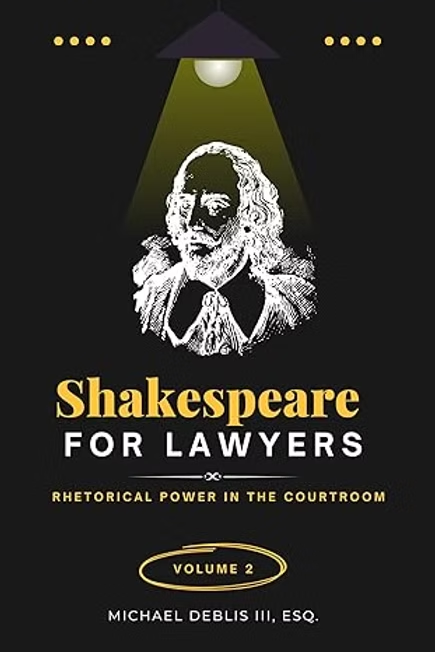
This is Volume 2 of the “Shakespeare for Lawyers” series and picks up where Volume 1 left off — with Rhetoric, a topic that you...
Read More
In this ebook, I will discuss strategies for cross-examining expert witnesses. We’ll begin with an overview of the rules of evidence governing experts as well...
Read More
Human expression has always fascinated me. In this ebook, I begin by addressing the “villain” stereotype that is hoisted on a criminal defendant from the...
Read More
Virtually every performance coach would agree that memorized text should be spoken in a way that makes the listener feel that the thoughts are coming...
Read More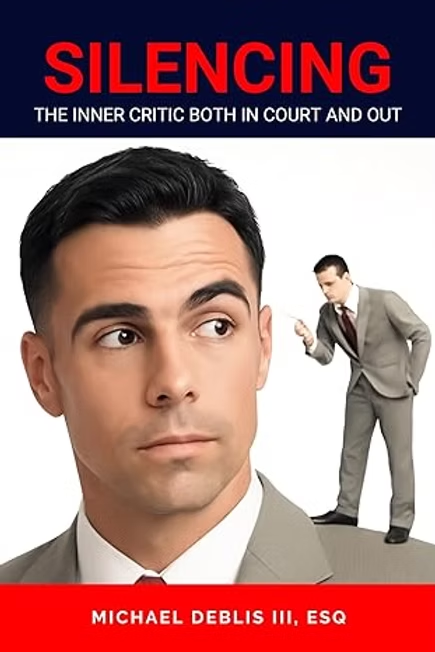
This ebook provides a comprehensive exploration of the theme of perfectionism, the inner critic, and the importance of being present in both personal and professional...
Read More
In this ebook, I will cover the beats that all great stories go through. From there, I’ll discuss the importance of finding the tempo of...
Read More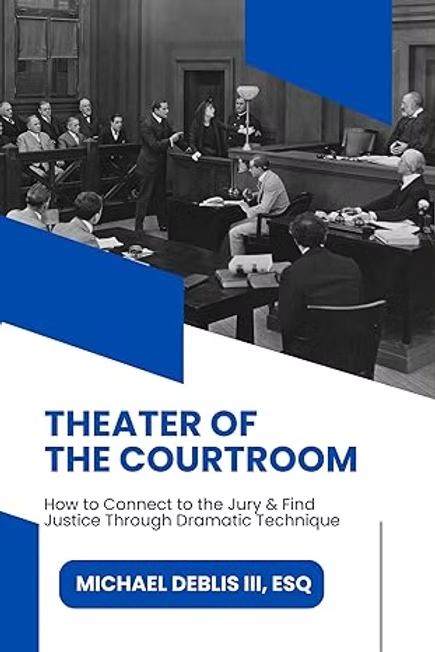
dated: Aug 12, 2025 At first blush, the similarities between the theater and the courtroom might seem as disparate as the difference between the lightning...
Read More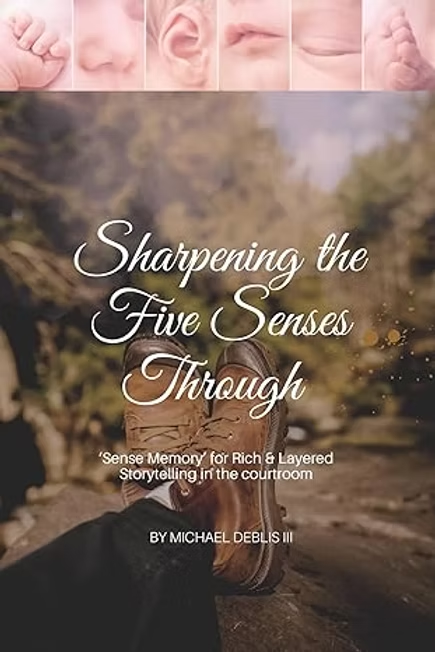
Updated: Aug 12, 2025 To be captivating storytellers, we need to learn to use the five senses when telling our client’s story. The five senses...
Read More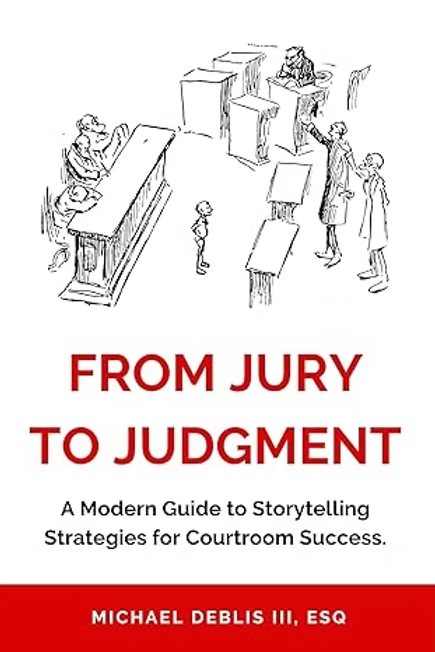
As a trial lawyer, what do you really need in order to win your case? Attention — the jury’s attention. I don’t mean that...
Read More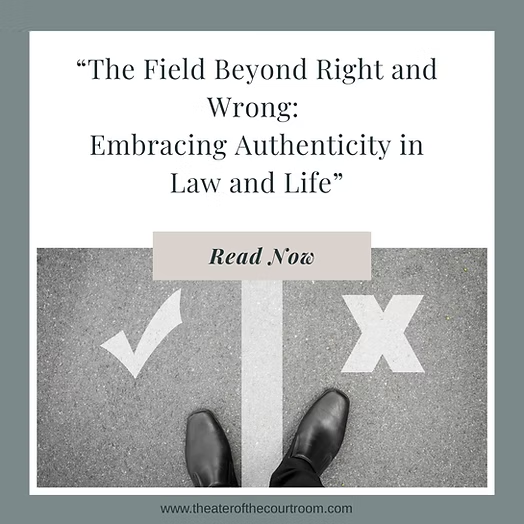
In today’s world, we are so obsessed by how we are perceived by others. Our personas reflect this. In fact, we spend such a disproportionate...
Read More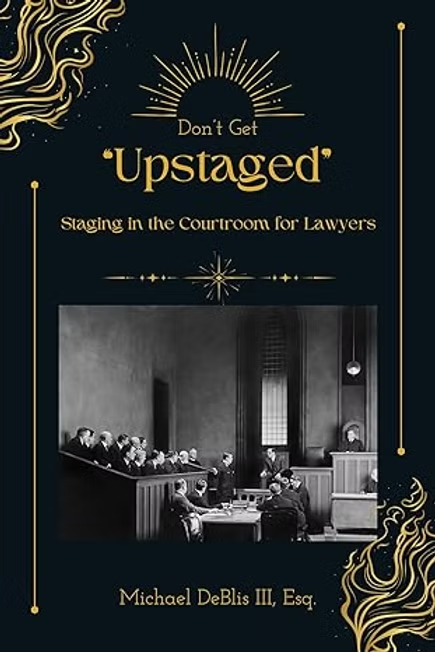
Studies show that only seven percent of what we communicate are our spoken words. As much as 93% of what we communicate is nonverbal. Our bodies...
Read More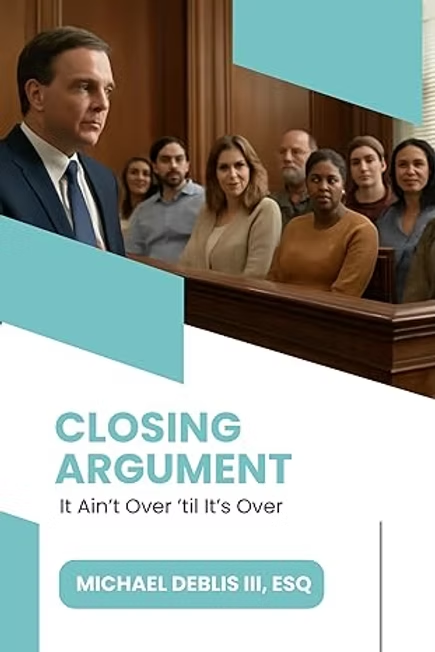
Closing argument is a great persuasive device to help you win your case. It is the most powerful part of the trial. It comes last...
Read More
Every trial lawyer knows the truth: the real fight happens long before the jury files into the box. The pre-trial phase is where narratives are shaped, leverage...
Read More
Updated: Dec 1, 2025 The part of you that wants to show and to impress the jury is scared. Those same thoughts that race through an actor’s mind—What if...
Read More
Every trial lawyer remembers their first jury trial—not because they were brilliant, composed, or in complete control, but because they weren’t. Nothing prepares you for...
Read More
This is the sequel to, “When Words Become Action: The Physical Power of Speech in the Courtroom.” I. Using the 3 Shapes or Modes...
Read More
The classical styles of speech were not abstract theories but practical tools, long refined and tested for their persuasive power. Originating in antiquity, preserved through...
Read More
Hermogenes’ Seven Styles describe distinct energetic qualities of speech. In the courtroom, these become strategic tools for shaping juror perception, guiding emotion, and controlling meaning. Each style is...
Read More
Below are practical examples showing how each type of listening directly shapes the very next cross-examination question. These are moments where disciplined listening—not scripted questions—creates leverage....
Read More
Trial lawyers are trained extensively in speaking—opening statements, examinations, objections, and closing arguments. Far less attention is paid to listening. Yet in trial practice,...
Read More
Trial lawyers love courtroom dramas for the same reason jurors do: conflict, control, and revelation. But beneath the theatrics, the best courtroom scenes in...
Read More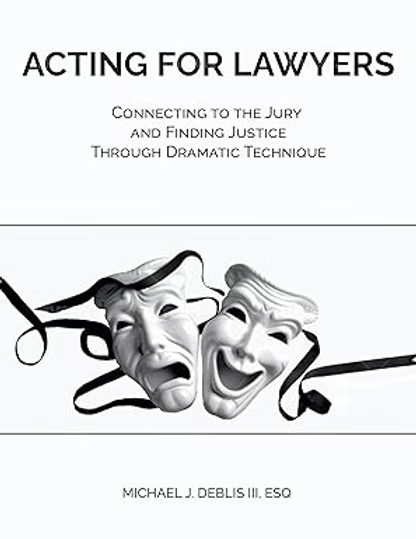
What if the most powerful trial skill isn’t legal knowledge—but presence? In Acting for Lawyers, trial attorney and trained actor Michael DeBlis III, Esq. reveals how the...
Read More
What Criminal Defense Attorneys Can Learn from Netflix’s You Premise: Assume Joe Goldberg—the obsessive, lethal protagonist of You—has been charged with all known killings, convicted after trial,...
Read More
Michael J. DeBlis III, Esq. Dec 9, 2025 4 min read In the courtroom, speech is never just words—it is action. Every sentence a trial...
Read More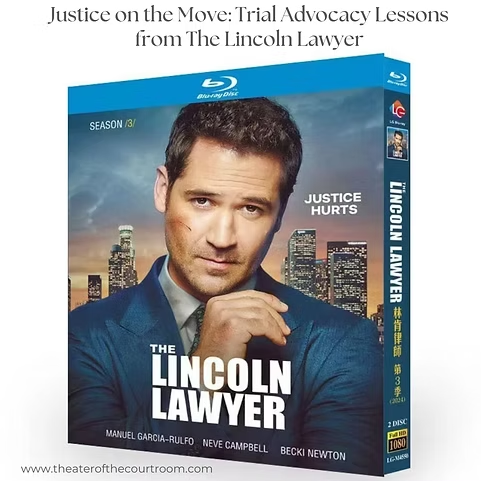
Quick Series Primer (For the Uninitiated) The Lincoln Lawyer (Netflix) follows Los Angeles criminal defense attorney Mickey Haller, who famously runs his law practice out of the...
Read MoreMichael J. DeBlis III, Esq. Jan 15 4 min read Jurors do not just listen to lawyers—they watch them. Long before a jury consciously evaluates your argument, their...
Read More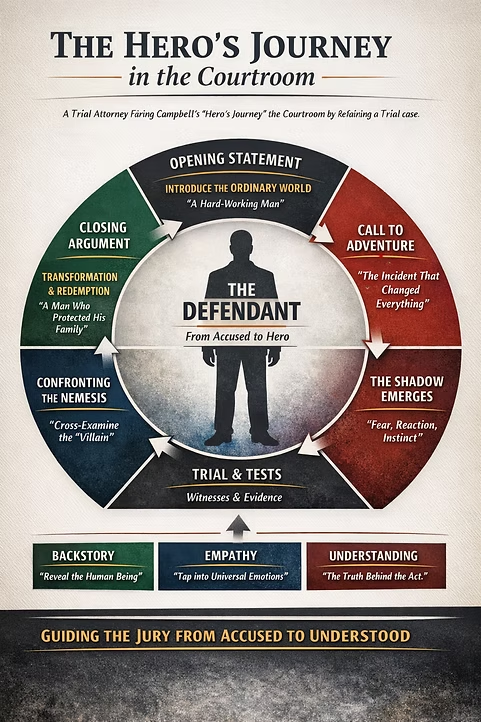
Trial lawyers are storytellers first and technicians second. Jurors do not experience a trial as a stack of briefs or a checklist of...
Read More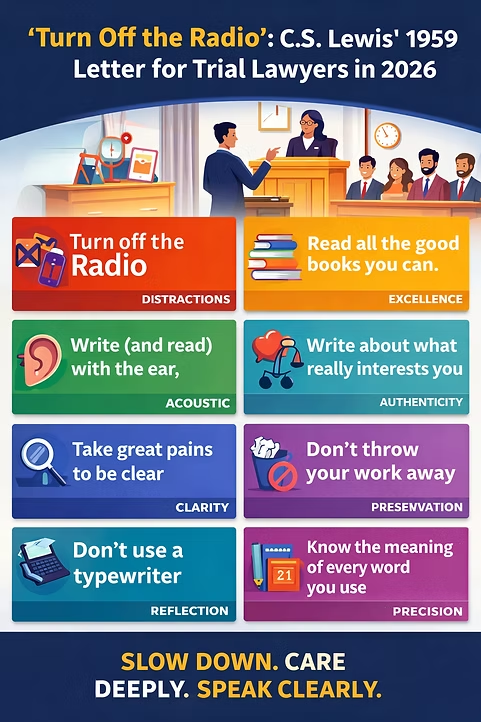
On December 14, 1959, C. S. Lewis wrote a short letter to a schoolgirl in America who had asked for advice on writing. His eight...
Read More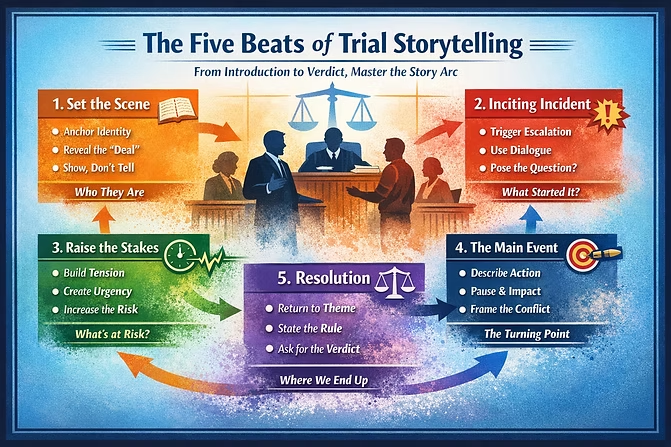
Trial lawyers love facts. Jurors love stories. And the verdict is rendered by jurors—not lawyers. The Five Beats storytelling framework taught by Michael...
Read Moree Michael J. DeBlis III, Esq. Mar 6 2 min read This reaction has a name: the startle reflex. Humans share it with every...
Read More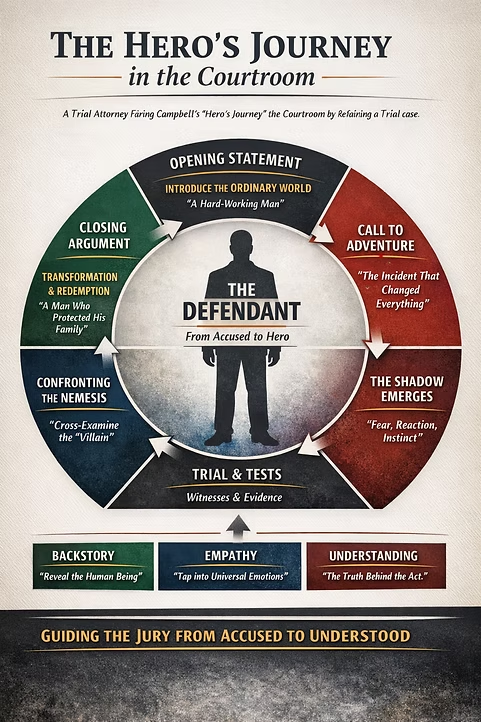
Trial lawyers are trained to master facts, evidence, and legal standards. But jurors don’t decide cases based on information alone—they decide based on meaning. And meaning...
Read More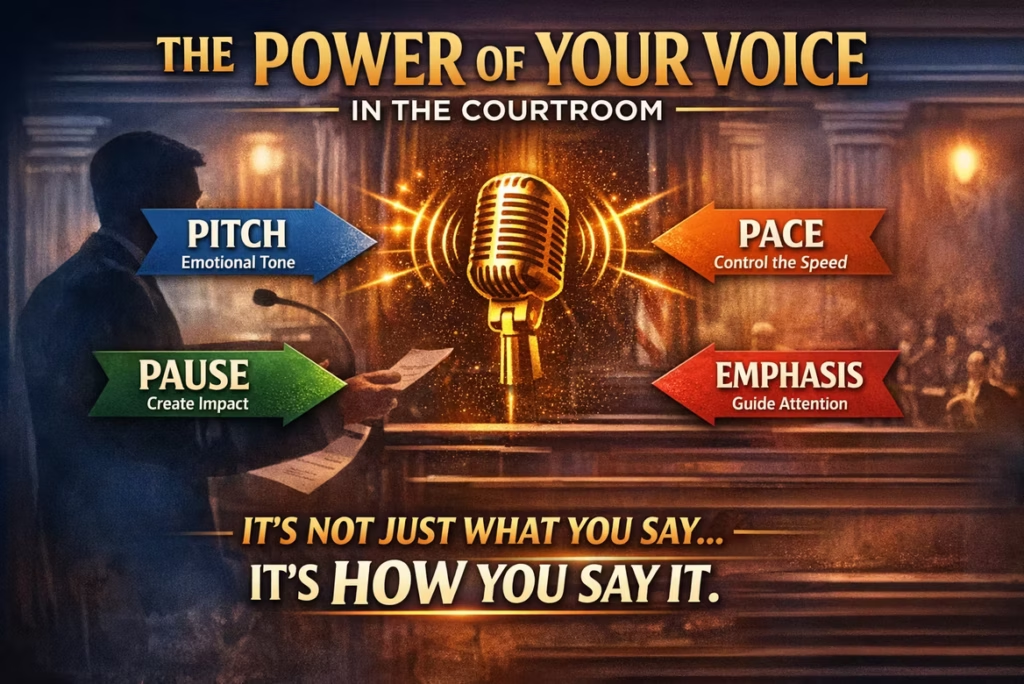
Trial attorneys spend countless hours refining what to say in an opening statement—facts, themes, structure. But jurors don’t experience your case on paper. They experience it through your...
Read More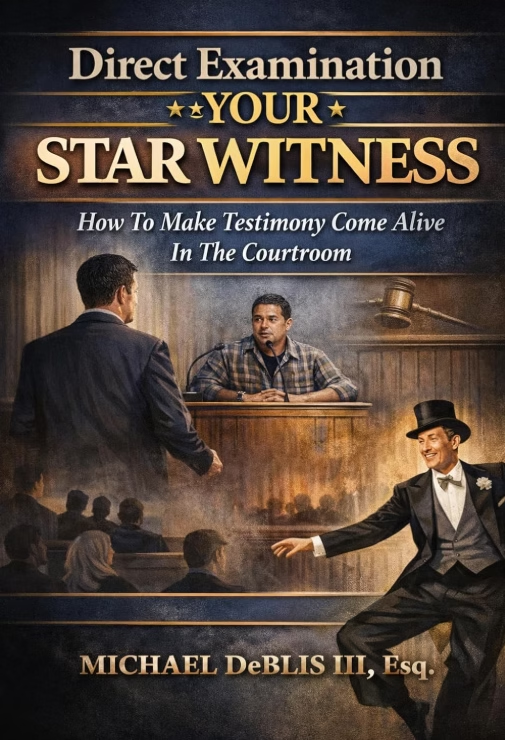
By Michael DeBlis III, Esq. Most trial lawyers obsess over cross-examination. It’s flashy. It’s confrontational. It wins headlines. But trials are rarely won...
Read More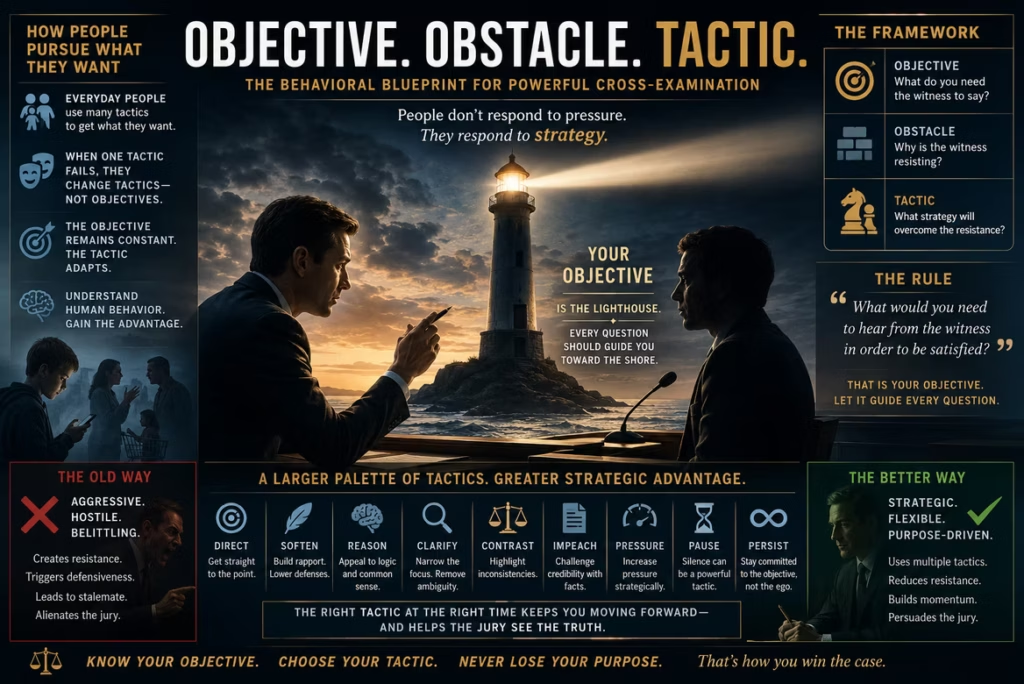
Most trial attorneys were taught that cross-examination is warfare. Attack the witness. Control the witness. Corner the witness. Expose the witness. Destroy...
Read More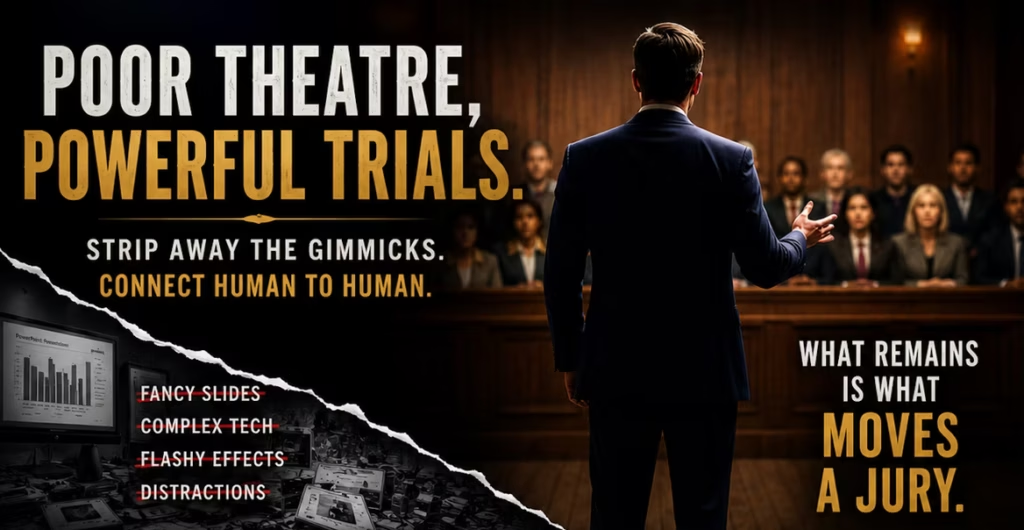
The greatest trial lawyers do not win because they have the flashiest PowerPoint presentation, the most sophisticated trial technology, or the slickest courtroom graphics....
Read More
There is a mystery at the heart of every great trial. It cannot be outlined. It cannot be rehearsed into existence. It cannot be...
Read More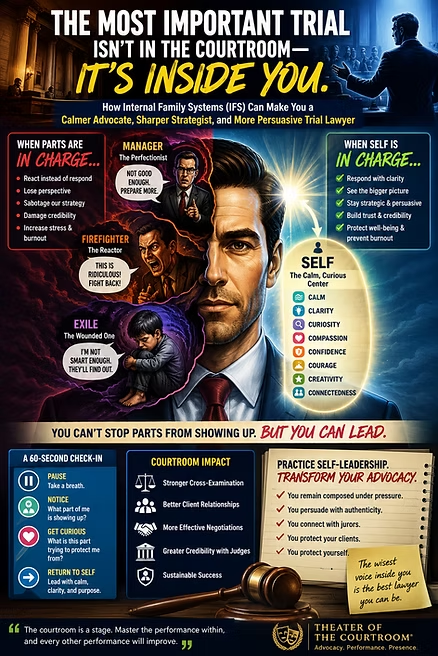
What Richard Schwartz’s Internal Family Systems Model Can Teach Trial Lawyers About Presence, Persuasion, and Professional Resilience Every trial lawyer knows the feeling. The courtroom...
Read MoreWhat Richard Schwartz’s Internal Family Systems Model Can Teach Trial Lawyers About Presence, Persuasion, and Professional Resilience Every trial lawyer knows the feeling. The courtroom...
Read More